When you're out on workers' compensation, medical bills unrelated to your work injury don’t stop. Your kids still get sick, you still need prescriptions for pre-existing conditions, and regular check-ups don't disappear. Yet workers' comp only covers treatment directly related to your workplace injury, leaving a huge question about who handles everything else.
At Ochoa & Calderon, our experienced Riverside workers' compensation attorneys get this question often. California workers frequently discover too late that their regular health insurance premiums might not be covered while they're receiving workers' compensation benefits. Here's what actually happens to your health insurance coverage when you're injured at work, and what options California law provides to protect you and your family.
Workers’ Compensation Coverage in California
Workers' compensation insurance covers specific medical expenses tied directly to your workplace injury. But there's more to the story than just getting your work-related treatment paid for.
What workers' comp actually covers:
- Emergency room visits for your workplace injury
- Surgery and hospitalization related to the incident
- Physical therapy prescribed for your recovery
- Medications specifically for your work injury
- Medical equipment like crutches or braces
- Transportation costs for approved medical appointments
Everything else in your life, from your diabetes medication to your child's ear infection treatment, still requires regular health insurance. California workers' compensation wasn't designed to replace your health coverage, just to supplement it for work-related injuries. This creates a coverage puzzle that injured workers must solve while trying to heal.
Who Pays for Your Health Insurance Premiums After a Work Injury?
California law doesn't require employers to keep paying your health insurance premiums once you're on workers' compensation leave. This surprises most injured workers who assume their benefits continue automatically. The reality varies dramatically depending on your employer's policies and size.
Under California Labor Code Section 4600, your employer must provide workers' comp medical coverage, but this statute says nothing about maintaining your regular health insurance. Some employers voluntarily continue premium payments as a company benefit, while others immediately shift that burden to you.
Here's who typically pays what:
- Large employers (50+ employees): Often continue premiums for 3-6 months through company policy.
- Union employers: Usually have negotiated continuation of health insurance benefits in collective bargaining agreements.
- Small businesses: May stop premium payments immediately upon workers' comp leave.
- Government employers: Generally maintain coverage throughout workers' comp leave.
- Self-insured employers: Policies vary widely, so check your employee handbook.
The federal Family and Medical Leave Act (FMLA) adds another layer. If you qualify for FMLA leave concurrent with workers' comp, your employer must maintain your health insurance for up to 12 weeks, but you might have to pay your portion of premiums out of pocket.
Does Workers’ Compensation Replace Health Insurance?
While workers’ compensation pays for injury-related medical expenses, it does not replace your regular health insurance. Workers’ comp is designed to cover only the medical costs associated with your work injury, so you still need health insurance for any other unrelated medical needs.
Can You Lose Health Insurance While on Workers' Comp in California?
Yes, you can absolutely lose your health insurance while on workers' compensation. Once FMLA protections expire (if you even qualified), your employer can legally stop paying their portion of your health insurance premiums. They can't fire you for filing a workers' compensation claim, but they're not obligated to keep funding your health benefits indefinitely.
The timing depends on several factors. Employers with generous policies might continue coverage for six months or more. Others cut benefits after just 30 days. Some tie it to how long you've worked there, with longtime employees often getting extended coverage, while newer hires see benefits end quickly.
If your employer stops paying for your health insurance, you may face additional challenges. Without health insurance, non-injury-related medical expenses will become your responsibility.
California Insurance Code Section 10113.9 provides one protection: insurers cannot cancel your coverage mid-month. So if your employer stops paying premiums on the 15th, your coverage continues through the month's end. Small comfort, but it gives you time to arrange alternatives.
Can You Sue Your Employer for Dropping Health Coverage on Workers' Comp?
Generally, no, but if they violated written company policy or a union contract, it might be possible. California's at-will employment laws give employers broad discretion over benefits. However, if dropping your coverage appears retaliatory for filing a workers' comp claim, you might have a case.
Steps to Take If You Lose Employer-Sponsored Health Insurance
Time moves fast when health coverage ends. Missing deadlines can leave you uninsured for months, so act immediately when you receive notice that your employer will stop paying premiums.
First, get everything in writing from HR. Request specific dates for when premium payments stop, when coverage ends, and what options are available. California law requires employers to provide written COBRA notices, but don't wait — be proactive.
- Calculate your COBRA costs immediately: Multiply your current total premium by 102% for the real number.
- Check Covered California deadlines: You have 60 days from coverage loss for special enrollment.
- Gather income documentation: You might qualify for premium subsidies based on reduced workers' comp income.
- Review your spouse's coverage: Adding to their plan might be cheaper than COBRA.
- Document all communications: Save emails and letters about benefit changes.
- Contact your prescribing doctors: Some offer patient assistance programs for medications.
- File complaints if needed: The Department of Insurance handles improper coverage terminations.
Don't let pride stop you from exploring every option. Medical bankruptcy is the leading cause of personal financial ruin in America. The programs below exist specifically for situations like yours.
Alternative Health Coverage Options During Workers' Comp
When employer coverage ends, California provides multiple safety nets, but you must know where to look and act quickly:
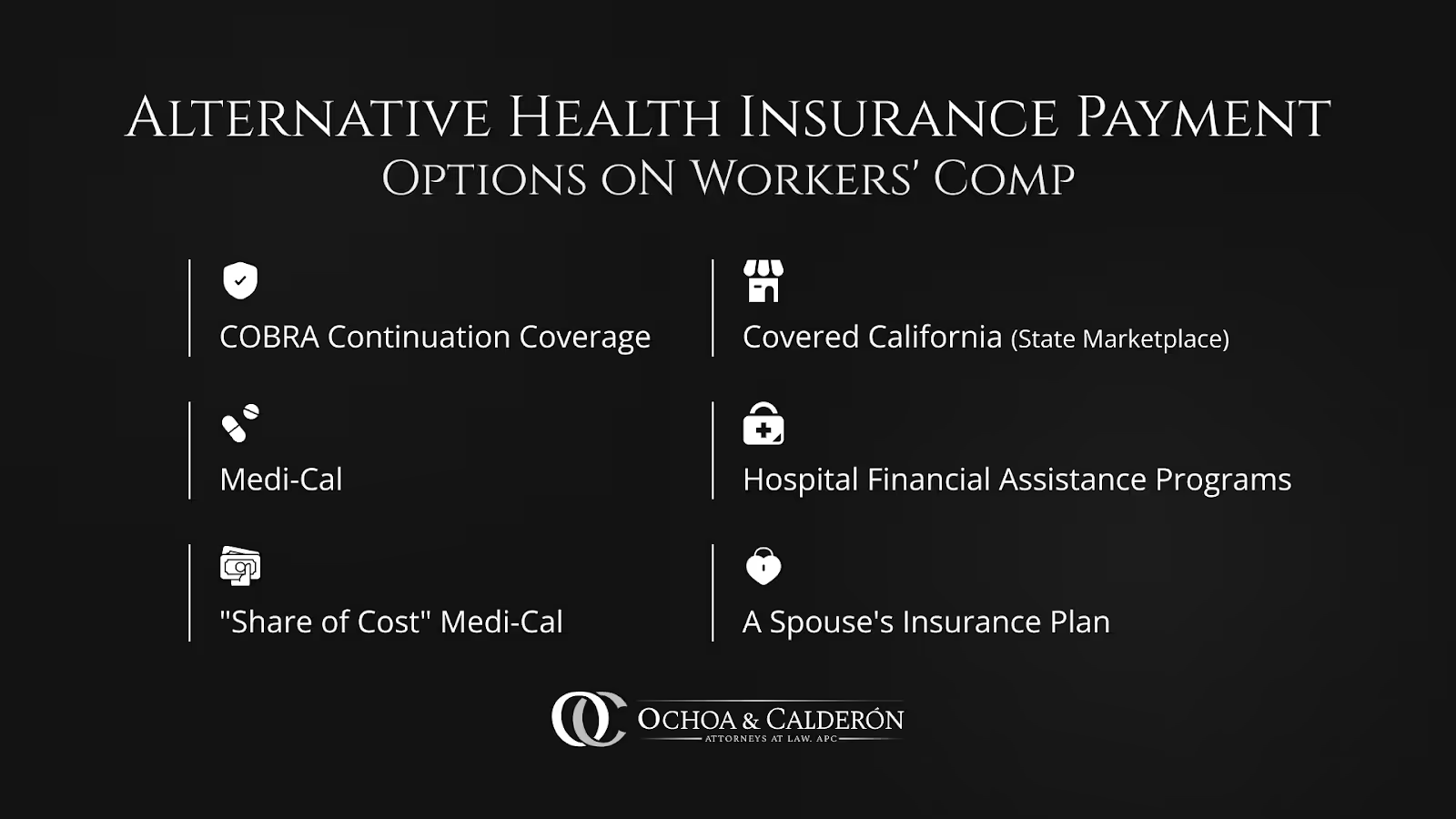
Keep Your Plan via COBRA
COBRA Continuation Coverage remains the default option, letting you keep your exact same insurance for 18 to 36 months. The shock comes with the price: you pay both employee and employer portions plus a 2% administrative fee. That $200 monthly contribution from your paycheck could suddenly become $1,200 per month.
Shop on the State Marketplace
Covered California (our state marketplace) often provides better deals than COBRA. Open enrollment runs from November to January, but losing employer coverage triggers special enrollment at any time of year. Premium tax credits can slash costs if your workers' comp payments are your only income.
Qualify for Low-Income Coverage
Medi-Cal becomes available if workers' comp temporary disability payments drop your income below 138% of the federal poverty level. Coverage is free or low-cost, includes prescriptions, and doesn't penalize pre-existing conditions. The application process can take 45 days, so apply immediately.
Bridge the Gap with a "Share of Cost"
Share of Cost Medi-Cal helps those who earn slightly too much for free Medi-Cal. You pay a monthly amount (like a deductible) based on income, then Medi-Cal covers the rest. Although complicated, it is worthwhile for expensive medications or ongoing treatment.
Seek Hospital Financial Assistance
Hospital financial assistance programs can cover emergency care if you're between insurance plans. Each hospital has different income requirements, but most offer free or reduced care up to 400% of the poverty level. Ask for financial counselors before treatment when possible.
Join a Spouse's Insurance Plan
Spousal coverage might be your cheapest option if your husband or wife has employer insurance. Most plans allow special enrollment within 30 days of losing other coverage. Compare total family costs carefully, as sometimes two separate plans cost less.
Get The Benefits You Deserve. Call for Honest Answers.
Our Riverside workers' comp lawyers fight to ensure you get full compensation for your injury, including costs related to lost benefits. Contact us today!
We’ll Fight for What’s Rightfully Yours
Don't let them minimize your pain or your claim. We fight for maximum compensation. Get a free consultation today.
Conclusion
While workers’ comp covers medical expenses related to your injury, it doesn’t replace your personal health insurance. If your employer stops paying for your insurance, you’ll need to explore alternatives like COBRA, Medicaid, or marketplace insurance. Always review your options carefully.
The attorneys at Ochoa & Calderon specialize in helping injured workers throughout Riverside and Southern California protect both their workers' comp benefits and their family's health coverage. If you need legal assistance with workers' comp benefits, contact our team today for a free, confidential consultation!

Co-Founder & Partner
Co-founder bringing elite education from Pacific Union College and Chapman Law to every case.
Heading
Don't let them minimize your pain or your claim. We fight for maximum compensation. Get a free consultation today.