Upland Workers' Compensation Lawyer
Strong Advocacy for Injured Workers Across Upland Workplaces


Strong Advocacy for Injured Workers Across Upland Workplaces
Ochoa & Calderón
A work injury can disrupt income, medical treatment, and the ability to return to the job. California’s workers' compensation system may provide medical care, temporary disability benefits, permanent disability benefits, and other relief after a workplace injury or occupational illness. Our Upland workers' compensation lawyers help evaluate claims, address insurance disputes, and pursue available benefits.
Ochoa & Calderón represents injured workers in Upland and across Southern California in workers' compensation cases involving medical treatment disputes, disability benefits, cumulative trauma claims, claim denials, and employer retaliation. We also assess whether the facts support related employment law or personal injury claims.

20 years+
of experience
$200+ million
recovered for clients
A work injury can lead to physical pain, lost income, medical treatment issues, and claim disputes. Our Upland workers' compensation team represents employees across the Inland Empire in a wide range of workplace injury and occupational illness claims, including:

Contact Ochoa & Calderón for a focused review of the medical record, claim status, and benefits that may still be available.
California workers’ compensation follows a separate administrative system with rules that can affect reporting, treatment, benefit timing, and claim disputes. As the California Division of Workers’ Compensation explains, these procedures often shape the claim long before any hearing takes place.
California workers’ compensation is generally a no-fault system. An injured employee usually does not need to prove that the employer acted negligently to seek benefits for a job-related injury or illness.
An injured worker should report the injury to the employer as soon as possible, since a delay can put benefits at risk and notice generally must be given within 30 days. Under Labor Code § 5401, once the employer learns of the injury, it must provide or mail the DWC-1 claim form within one working day. Returning that form helps start the formal workers’ compensation claim process.
Once the claim form is filed, the employer must authorize appropriate medical treatment while the claim is under investigation, up to the applicable statutory limit. The insurance company generally also has 14 days to send a letter explaining the status of the claim, which often gives the worker the first written indication of whether the case is being accepted, delayed, or disputed.
If the claim is not denied within 90 days after the form is filed, it is generally presumed compensable under California law. California also imposes a filing deadline through Labor Code § 5405, which generally requires proceedings to collect benefits to be commenced within one year from the date of injury, the end of disability payments, or the last furnishing of medical treatment, depending on the circumstances.
Workers’ compensation disputes are handled through California’s administrative system rather than ordinary civil court. Medical treatment disputes, disability issues, and other contested matters may proceed through hearings and other Workers’ Compensation Appeals Board procedures.
These rules can affect whether a claim moves forward smoothly or becomes harder to prove. Prompt reporting, accurate paperwork, and close attention to deadlines can make a significant difference in the outcome, and our Upland workers' comp attorney can help address these issues early in the process.

California law may provide several categories of workers' compensation benefits after a work injury. Depending on the facts, a worker may qualify for medical treatment, temporary disability, permanent disability, supplemental job displacement benefits, and death benefits. Our workers' compensation attorney in Upland, CA, can review how the injury happened, whether the worker can return to the job, and whether the insurance company is paying benefits correctly.
Medical treatment is a central part of many workers' compensation claims. California Labor Code § 4600 requires treatment that is reasonably required to cure or relieve the effects of the injury. That may include emergency care, follow-up visits, diagnostic testing, surgery, medication, physical therapy, specialist referrals, and other forms of medical care.
Temporary disability benefits may apply when injured workers lose wages because they cannot do their usual job while recovering. California Labor Code § 4650 addresses the timing of disability payments and when the employer or claims administrator must begin paying benefits after learning of the injury and disability.
Some injured employees do not fully recover and remain subject to work restrictions or lasting impairment. In those cases, the claim may involve permanent disability benefits. The amount may depend on medical reporting, work limitations, and other statutory factors.
When a worker cannot return to the prior job and the employer does not provide qualifying work, California law may provide a supplemental job displacement voucher for retraining or skill development.
When a workplace injury or occupational illness results in death, eligible dependents may have a claim for death benefits under California’s workers' compensation law.

Work injuries affect employees across a wide range of job settings in Upland and throughout the Inland Empire. Ochoa & Calderón represents injured workers in many sectors where physically demanding tasks, repetitive motion, hazardous conditions, and high-pressure work environments often lead to workers’ compensation claims.
Manufacturing and warehouse jobs often involve lifting, loading, machinery use, repetitive motion, conveyor systems, forklifts, and fast-paced production demands. These workplaces can give rise to back injuries, crush injuries, repetitive stress claims, and other serious work-related harm.
Healthcare employees often face lifting injuries, repetitive strain, workplace violence, infectious exposure, and long shifts that place stress on the body. Nurses, aides, technicians, support staff, and other medical workers may suffer both sudden injuries and cumulative trauma.
Construction sites and trade work present a high risk of fall injuries, heavy equipment accidents, struck-by incidents, repetitive wear, and other serious job-related injuries. These claims may involve both workers’ compensation issues and, in some cases, third-party liability.
Drivers, delivery workers, freight handlers, and logistics employees may face vehicle accidents, lifting injuries, repetitive motion conditions, and loading or unloading incidents. These jobs often involve both physical strain and roadway exposure.
Retail and service industry employees may suffer slip-and-fall injuries, stocking injuries, repetitive motion conditions, overexertion, and accidents involving storage rooms, kitchens, cleaning equipment, or customer-facing work areas.
Police officers, firefighters, paramedics, dispatch personnel, and other emergency workers often face physically intense conditions, traumatic incidents, repetitive stress, and exposure-related claims tied to the demands of public safety work.
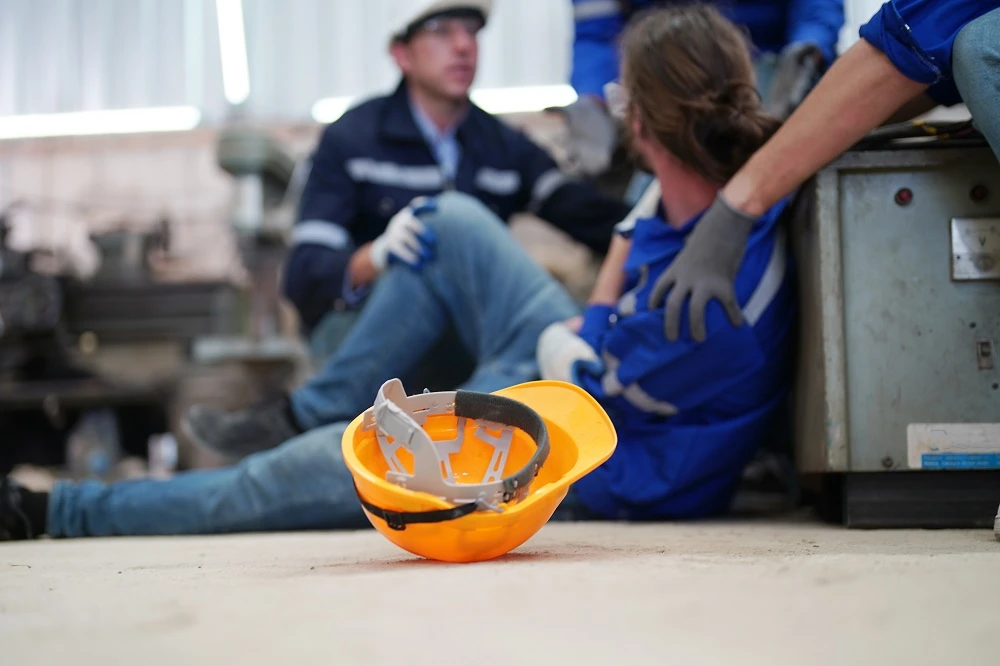
The steps taken after a work injury can affect both medical coverage and wage replacement benefits. California Labor Code § 5401 requires the employer to provide a claim form after notice of injury. The California Division of Workers’ Compensation also states that employers must authorize limited treatment while the claim is under investigation and that a claim not denied within the statutory period may be presumed compensable.
An injured employee should notify the employer as soon as possible after a workplace injury or the onset of job-related symptoms. Early notice can reduce disputes about when the injury happened and whether it arose out of the job.
After notice of injury, the worker should request and complete the DWC-1 claim form. This form starts the formal workers' compensation claim process and helps create a record of the reported injury.
Medical attention should be obtained as soon as possible so the injury is documented and treatment can begin. Prompt care can also help connect the condition to the workplace incident or job duties.
The worker should keep copies of medical records, work status reports, claim forms, wage information, and communication with the employer or insurance company. Clear records can help support the claim if benefits are delayed or disputed.
A worker should be precise when explaining how the injury developed. In cases involving repetitive motions, repetitive stress injuries, hearing loss, and occupational illnesses, the date of injury and reporting history may later become contested.
Some claims arise from one accident, while others develop over time through repeated work activity or exposure. Our Upland workers' compensation attorney can assess whether the claim should be framed as a specific injury claim or a cumulative trauma claim.

Many workers’ compensation cases become contested even when the injury clearly occurred on the job. The insurance company may dispute whether the injury arose out of employment, whether treatment is necessary, whether temporary disability should continue, or whether the worker has reached maximum medical improvement.
Claim disputes often involve:
Our Upland workers’ compensation lawyer can review medical records, wage records, employer reports, and claim notices to identify what relief may still be available. In many workers’ compensation cases, the problem is not only the injury itself, but also how the claim has been handled after it was reported.
A work injury claim can involve more than filing paperwork with an employer or waiting for the insurance company to act. Delayed treatment, disputed medical findings, late disability payments, and pressure to return to work too soon can all affect the outcome of the case. Ochoa & Calderón helps injured workers in Upland address these issues at each stage of the claim.
Our firm reviews how the injury happened, whether the claim was reported properly, what medical treatment has been approved or denied, and whether temporary or permanent disability benefits are being paid correctly. We also assess whether the case involves employer retaliation, wrongful termination, or third-party liability when the facts support broader legal action.

Co-Founder & Partner
Co-founder bringing elite education from Pacific Union College and Chapman Law to every case.
Co-Founder & Partner
USC Law graduate with 20+ years of experience making insurance companies pay what they owe.
Ochoa & Calderón represents injured workers in claims involving medical treatment disputes, disability benefits, claim delays, and related legal issues.

Ochoa & Calderón is built around workers' compensation representation. The firm handles claim denials, permanent disability claims, medical benefits disputes, cumulative trauma cases, retaliation matters, and a wide range of workplace injury claims.

Some work injury matters involve more than a workers' compensation claim alone. Ochoa & Calderón also handles employment law and personal injury matters, which can be significant in cases involving retaliation, wrongful termination, or third-party liability.

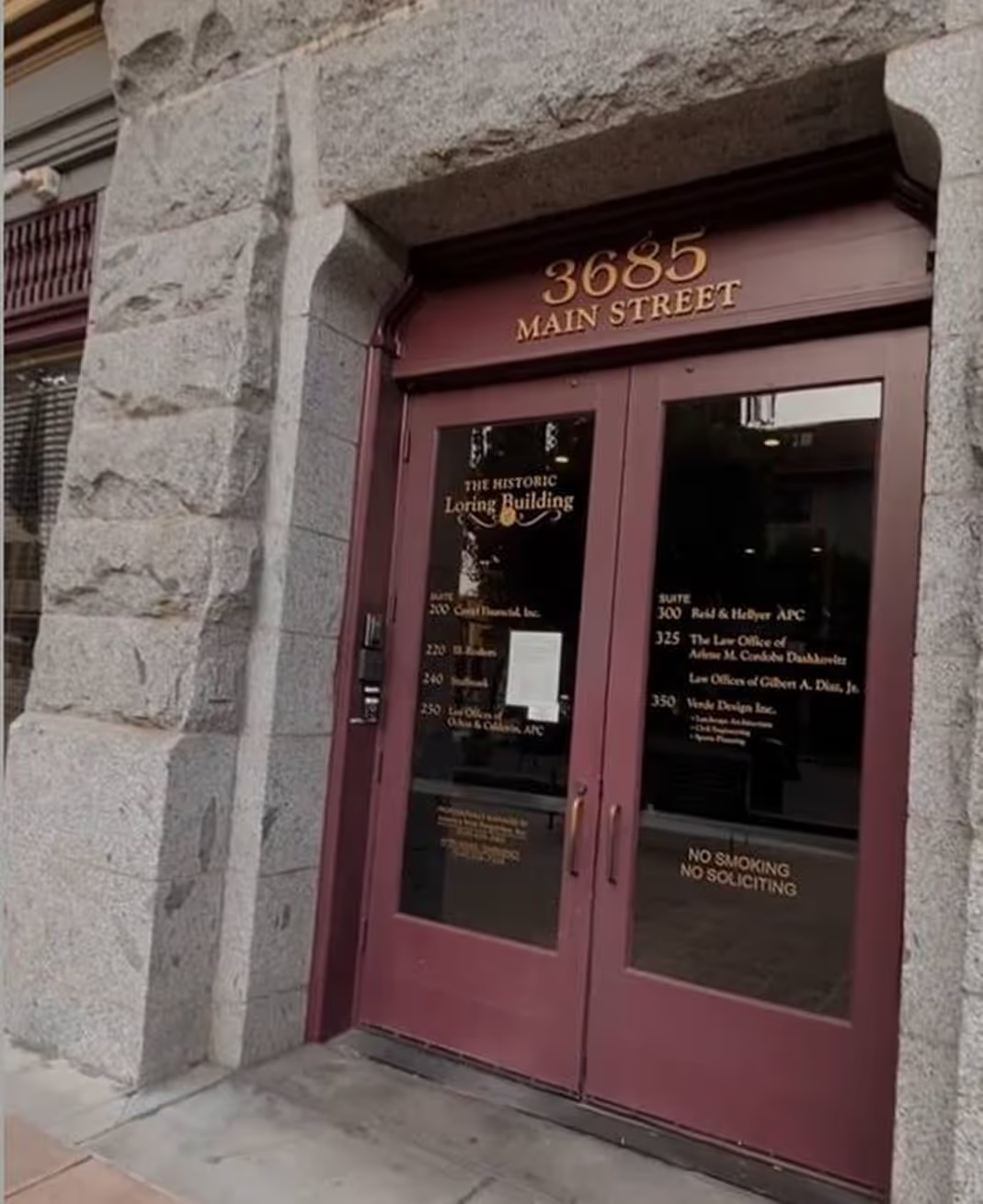
Ochoa & Calderón is based in Riverside and represents clients throughout Southern California, including Riverside County and San Bernardino County, while maintaining a strong focus on workers' compensation claims.
From our Riverside office, we handle workers' compensation claims for employees across Upland and the Inland Empire:
.avif)

Call today for a free consultation about your work injury, your benefits, and any disputes affecting treatment or disability payments.