Getting fired after a workplace injury raises urgent questions about whether you can collect workers' comp after being fired. California law protects your right to workers' compensation benefits even after termination, but strict rules and tight deadlines can derail valid claims if you don't act fast.
At Ochoa & Calderón, our Riverside workers' compensation experts know how employers use post-termination defenses to deny legitimate claims. We've spent over 20 years using our specialized knowledge and skill to help injured workers through California's workers' compensation system and secure the medical coverage and wage replacement they deserve.
Your Right to Collect Workers' Comp After Being Fired
California workers' compensation law protects injured employees regardless of employment status when you file a workers' comp claim. If your injury occurred while you were employed, termination doesn't automatically eliminate your workers' compensation eligibility.
The crucial factor is proving your work-related injury happened during your employment, not whether you still work for the company when filing workers' compensation claims. California Labor Code § 3600(a)(10) establishes this protection, though employers frequently attempt post-termination defense strategies to avoid paying benefits.
When Termination Doesn't Affect Your Workers' Comp Claim
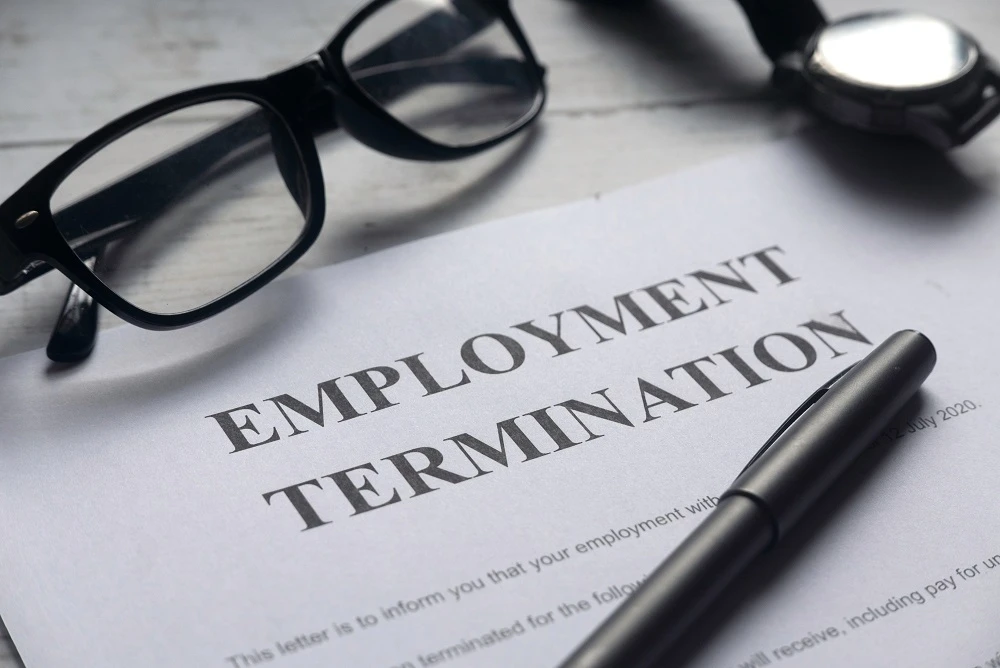
Your employment status does not affect your right to receive workers' compensation benefits. Workers' comp eligibility is based on the injury's occurrence during your employment, not on whether you remain employed. Here's when termination doesn't affect the workers' compensation claim:
- Injury before termination: Your workplace injury occurred while you were still an employee, establishing clear work-causation that termination cannot erase.
- Delayed symptom discovery: You didn't realize your injury happened until after leaving your job, which California law recognizes for conditions like repetitive motion injuries or occupational diseases.
- Final shift injuries: You were injured during your last day of work, making the injury's timing unquestionably job-related.
- Retaliation claims: Your employer fired you specifically because you filed a claim or reported an injury, violating California Labor Code § 132a.
What Benefits Can You Receive After Termination
Your employment status doesn't change what workers' comp benefits you're entitled to receive. California law mandates that injured employees get full medical coverage and wage replacement regardless of whether you still work for your former employer.
Medical Treatment and Care
Workers' compensation covers all necessary medical care for your work injury without any out-of-pocket medical expenses to you:
- Immediate medical treatment: Emergency care, hospital stays, surgeries, and diagnostic procedures that address your injury.
- Ongoing medical care: Physical therapy, prescription medications, medical equipment, and follow-up appointments with your treating physician for as long as your injury requires treatment.
- Travel reimbursement: Mileage payments for trips to medical appointments, ensuring financial barriers don't prevent you from getting necessary care.
Temporary Disability Benefits

If you can't work while recovering, temporary disability provides financial support:
- Wage replacement: Two-thirds of your average weekly wages, up to California's maximum rate ($1,764.11 for 2026 per week and increases every year), while your doctor certifies you cannot perform your usual job duties.
- Payment duration: Benefits continue until you reach maximum medical improvement or can return to work, with extensions available for severe injuries.
Note: Wondering about health insurance while on workers' compensation? Your medical benefits through workers' comp cover injury-related care, but general health insurance is a separate issue after termination.
Permanent Disability Awards
Lasting impairments trigger additional compensation beyond temporary disability benefits, with medical evaluators determining your permanent disability percentage based on your work restrictions, age, occupation, and diminished future earning capacity. You can receive your permanent disability award as either a single payment or installments, and if you can't return to your previous job due to work restrictions, California provides a $6,000 voucher for retraining through supplemental job displacement benefits.
What You Get If Terminated (Beyond Workers' Comp)
California employment law provides additional protections when employers fire injured workers:
- Final paycheck rights: Your employer must provide your final wages immediately upon termination or within 72 hours, including unused vacation time and earned commissions under California Labor Code § 201-202.
- COBRA health coverage: You have the right to continue your group health insurance for 18 months by paying the premiums yourself, protecting your medical coverage during recovery.
- Wrongful termination claims: If your firing violated California Labor Code § 132a by retaliating against you for filing a workers' comp claim, you can sue for additional damages beyond workers' compensation benefits.
Common Mistakes That Destroy Post-Termination Claims
Even valid claims fail when injured workers make critical errors after getting fired. Insurance companies exploit every misstep to deny benefits and avoid paying what you're owed, turning what should be straightforward workers' compensation cases into drawn-out disputes that leave injured workers without medical care or wage replacement.
Cases involving denied claims, IMR disputes, or questions about settlement timing become exponentially harder without proper documentation and legal representation to counter your former employer's post-termination defenses.
How Far Back Can You File a Workers' Comp Claim in California
California's statute of limitations generally gives you one year from the date your injury occurred to file a workers' comp claim, with the clock starting on the day you got hurt for injuries with a clear incident date, like falls or accidents. However, cumulative trauma injuries like carpal tunnel syndrome or back injuries from repetitive job tasks start the one-year period when you knew or should have known your injury was work-related. Also, toxic exposure and other occupational diseases with delayed symptom onset can extend filing deadlines.
Critical Steps to Protect Your Workers' Compensation Eligibility
Taking immediate action after termination preserves your right to medical treatment and temporary disability benefits. Creating detailed documentation strengthens your case against the denial of post-termination claims, while filing quickly prevents employers from using deadline violations to deny valid claims.
Document Everything

Keep detailed records of the following information:
- Medical documentation: Obtain copies of all medical records, including emergency room visits, treating physician notes, diagnostic tests, and prescribed medical care that links your injury to your previous job.
- Incident reports: Request copies of any workplace accident reports filed with your former employer, which serve as official documentation that your injury happened during employment.
- Witness contact information: Collect names and contact details of coworkers who saw your injury occur or can verify your work restrictions and how performing job duties caused your condition.
File a Claim Immediately
If you haven't already, file your workers' comp claim as soon as possible. Timely filing is critical, especially after termination, to prevent your employer from arguing that the injury is unrelated to your employment.
Consult a Workers' Comp Attorney
Hiring a workers' comp attorney can significantly improve your chances of receiving benefits. They can help you deal with the complexities of the claim process, gather necessary evidence, and represent you in disputes.
Legal representation dramatically improves your chances of securing full benefits after termination:
- Claim evaluation: Attorneys review your medical evidence and employment records to identify all available benefits, including temporary disability payments, permanent disability, and supplemental job displacement benefits.
- Defense against employer disputes: Legal representation counters post-termination defense tactics by gathering witness statements, medical records, and documentation that proves your injury's work-causation.
- Protection from retaliation: If employer retaliation led to your termination, attorneys can file wrongful termination claims alongside your workers' compensation case to secure additional damages beyond standard benefits.
FAQs
Can I collect workers' comp after being fired if I didn't report my injury before termination?
Yes, you may still collect workers' compensation after being fired if you report your injury within 30 days of its occurrence under California Labor Code § 5400, even after termination. However, delayed reporting makes your claim harder to prove, so contact a workers' compensation lawyer to help establish the timeline and prove your job-related injury occurred during employment.
How do I prove my injury is work-related after being fired?
You need medical records linking the injury to job duties, incident reports showing you reported the injury, and witness statements from coworkers who saw the accident. Your treating physician's assessment that connects your injury to your job duties is crucial, and legal representation helps counter scrutiny from the employer's insurance company.
Will my employer's insurance company pay my medical bills after I'm fired?
Yes, your employer's insurance company must continue to pay all medical bills for work-injury treatment, regardless of employment status, including immediate medical treatment, ongoing medical care, and rehabilitation services. If your former employer's insurance company denies coverage, contact a workers’ comp attorney immediately to ensure you receive workers’ compensation benefits.
Don't Let a Termination Stop Your Work Comp Benefits
The insurance company wants you to give up. Don’t let them win. Our expert legal team will fight to prove your valid claim and maximize your recovery.
We’ll Fight for What’s Rightfully Yours
Don't let them minimize your pain or your claim. We fight for maximum compensation. Get a free consultation today.
Get the Benefits You Deserve After Termination
California law protects your right to workers' compensation benefits even after your employer fires you, with the key being to act fast by documenting your injury, filing your claim before deadlines expire, and countering the post-termination defenses insurance companies deploy to avoid paying valid claims.
At Ochoa & Calderón, our Riverside workers' compensation lawyers have recovered millions for injured workers throughout Southern California, including clients who faced claim denials after termination. We know how to prove work-causation, secure proper medical evidence, and fight employer disputes that threaten your benefits. Contact us today for a free consultation about your case.

Co-Founder & Partner
Co-founder bringing elite education from Pacific Union College and Chapman Law to every case.
Heading
Don't let them minimize your pain or your claim. We fight for maximum compensation. Get a free consultation today.