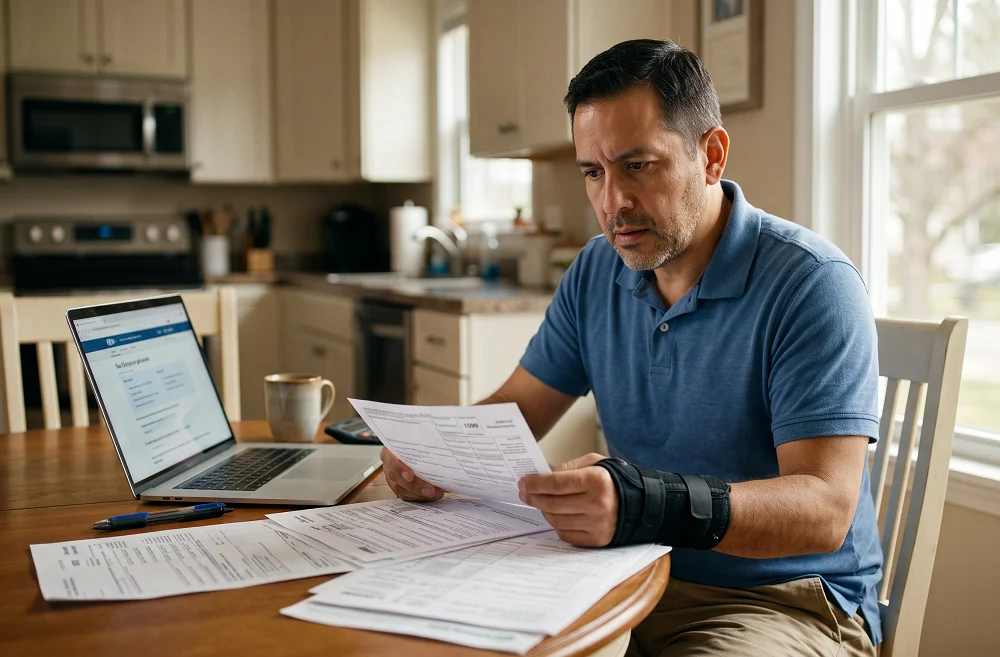
Once a workers’ compensation case settles, most injured workers expect payment to follow shortly. In Riverside, that expectation often runs into delays because settlement approval and settlement payment are separate stages under California law.
At Ochoa & Calderón, our Riverside workers’ compensation attorneys regularly step in after settlement approval when payment stalls, paperwork drags, or insurers stop responding. Payment delays are common, but they are rarely something you have to accept without action.
When You Should Expect Your Workers’ Comp Settlement Payment in California
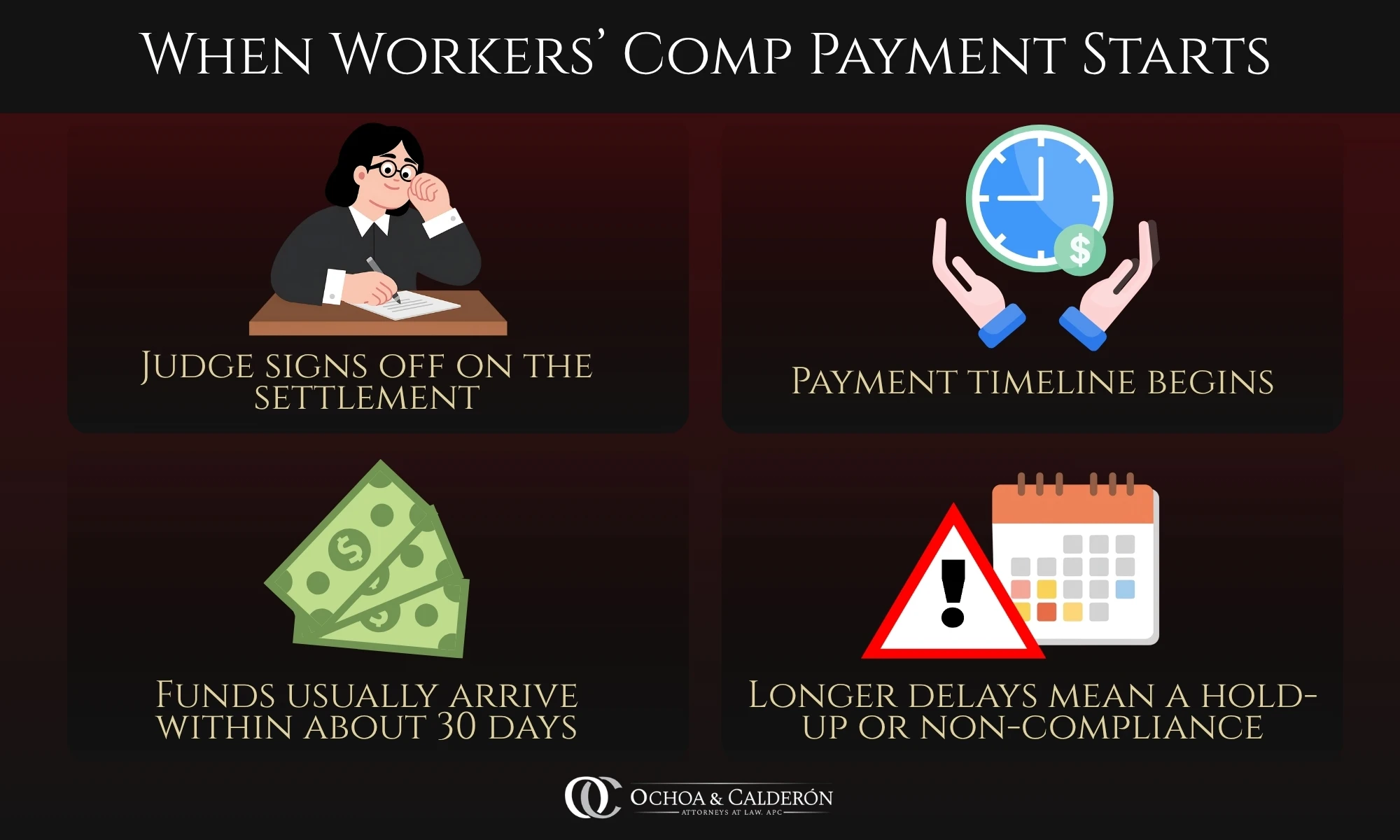
Many injured workers don’t realize that payment delays often stem from what happened earlier in the case, including when workers’ comp insurers typically make settlement offers. In Riverside workers’ compensation cases, payment does not begin when negotiations end or even when settlement documents are signed. Payment obligations begin only after a workers’ compensation judge approves the settlement through the Workers’ Compensation Appeals Board.
Under California Labor Code §5001, a settlement is not enforceable until it receives judicial approval. Once approval is issued, insurers are required to issue payment promptly. In most cases, payment is expected within about 30 days after approval.
This timeline assumes:
- Approval has been formally entered by the WCAB.
- All settlement paperwork is complete and accurate.
- No unresolved liens or compliance issues remain.
If payment extends beyond that period, there is usually a specific reason or a failure to comply with statutory obligations.
Why Settlement Payments Get Delayed in Riverside Cases
Even after approval, settlement payments are frequently delayed. These delays usually fall into two categories: issues that legally prevent payment and factors that slow payment without formally blocking it.
Common Causes That Directly Delay Payment
These issues must be resolved before payment can lawfully be issued:
- Unresolved medical or governmental liens: Medical providers or state agencies may assert reimbursement claims against the settlement. If lien amounts are disputed or incomplete, insurers often hold payment until the issue is resolved.
- Medicare Set-Aside (MSA) requirements: When a settlement closes out future medical care, and Medicare eligibility is involved, insurers may delay payment until Medicare compliance is confirmed.
- Incomplete or incorrect settlement paperwork: Missing signatures, incorrect payee information, or clerical errors can prevent payment from being processed.
These causes require corrective action before funds can be released.
Factors That Commonly Slow Payment After Approval
These factors do not legally block payment but often extend the timeline:
- Insurance carrier processing backlogs: High claim volume, staffing shortages, or inefficient internal systems can slow settlement disbursements.
- Paper check and mailing delays: Physical checks are vulnerable to lost mail, outdated addresses, or internal mailing delays.
- Additional internal approvals: Larger settlements may require multiple levels of authorization within the insurance company.
- Lack of enforcement pressure: In many cases, payments are delayed simply because no one is actively pushing the insurer to meet deadlines.
When these factors combine, delays can stretch well beyond what California law contemplates. Under California Labor Code §5814, an unreasonable delay or refusal to pay workers’ compensation benefits can result in financial penalties. These penalties exist to discourage insurers from using delay as a tactic after a case is resolved.
Steps to Take If a California Workers’ Comp Payment Is Delayed
When payment is delayed, structured action matters.
Step 1: Confirm the Settlement Approval Date
Payment timing starts on the day the judge approves the settlement, not when the agreement was signed or negotiations ended.
Step 2: Review the Settlement Terms
Check whether the payment is a lump sum or scheduled, who receives the funds first, and whether any amount is listed as being held for fees or medical bills.
Step 3: Verify Your Payment Details
Confirm your name, mailing address, and whether payment is being sent by check or electronically. Small errors can stop payment from going out.
Step 4: Get a Clear Answer from the Adjuster
Ask why the payment hasn’t been issued and when it will be released. Push for a specific reason and a date, not general responses.
Step 5: Ask About Common Payment Holds
Find out whether medical bills, reimbursement claims, or review tied to future care are delaying release, and who is responsible for clearing them.
Step 6: Keep a Simple Record
Write down call dates, names, and any promised payment dates. This helps track missed commitments and stalled progress.
Step 7: Follow Up If the Date Passes
If the insurer misses its own timeline, follow up right away. Missed dates often signal that payment is not moving.
Step 8: Bring in an Attorney If the Delay Continues

When delays stretch without progress, having an attorney step in often changes the pace and forces action.
California law places the payment obligation on insurers, but enforcement often requires follow-through.
Who to Contact If a Settlement Payment Does Not Arrive
When a settlement payment does not arrive on time, a workers’ compensation attorney is typically the first point of contact. An attorney can determine whether the delay is legally justified and whether penalties or interest apply.
If informal efforts fail, enforcement usually involves:
- The Workers’ Compensation Appeals Board
- Formal penalty and interest requests
- Legal action to compel payment
Judicial enforcement does not occur automatically. Action is usually required.
Stop Waiting on Money That’s Already Yours
When a workers’ comp settlement gets approved, payment shouldn’t drag on for weeks. Ochoa & Calderón will step in, find the hold-up, and push until the check moves.
We’ll Fight for What’s Rightfully Yours
Don't let them minimize your pain or your claim. We fight for maximum compensation. Get a free consultation today.
Settlement Approval Is Not the Finish Line
A workers’ compensation settlement is not finished when it is approved. It is finished when the money is in your hands. When payment stalls, the problem usually isn’t timing, but simple follow-through.
At Ochoa & Calderón, we help Riverside workers move delayed settlement payments forward, address lien issues, and apply pressure when insurers stop responding. If your settlement has been approved and payment hasn’t arrived, it may be time to take the next step. Reach out to our team for help.

Co-Founder & Partner
Co-founder bringing elite education from Pacific Union College and Chapman Law to every case.
Heading
Don't let them minimize your pain or your claim. We fight for maximum compensation. Get a free consultation today.