Workers' comp settlements in California vary widely, with some arriving within 6 months and others taking over a year. Once notified of a potential work injury claim, insurers have 90 days to investigate and accept or deny the claim. But the timing of a workers’ comp settlement depends on your medical recovery and the severity of your injury. Knowing these deadlines helps you avoid lowball offers and secure fair compensation.
At Ochoa & Calderón, our workers' comp lawyers in Riverside, CA, have spent decades turning denied claims into substantial settlements, using our insider knowledge from both sides of the negotiation table to get injured workers paid what they deserve. Let's break down exactly when you can expect a settlement offer and what factors control that timeline.
How Soon Can Workers' Comp Offer a Settlement?
Some insurance companies wait until you reach maximum medical improvement (MMI) before discussing a settlement, but this is not the norm. This medical milestone means your condition has stabilized — you've recovered as much as possible, or your doctors can accurately predict your future limitations. Reaching MMI can take anywhere from a few months to several years, depending on the severity of your injury.
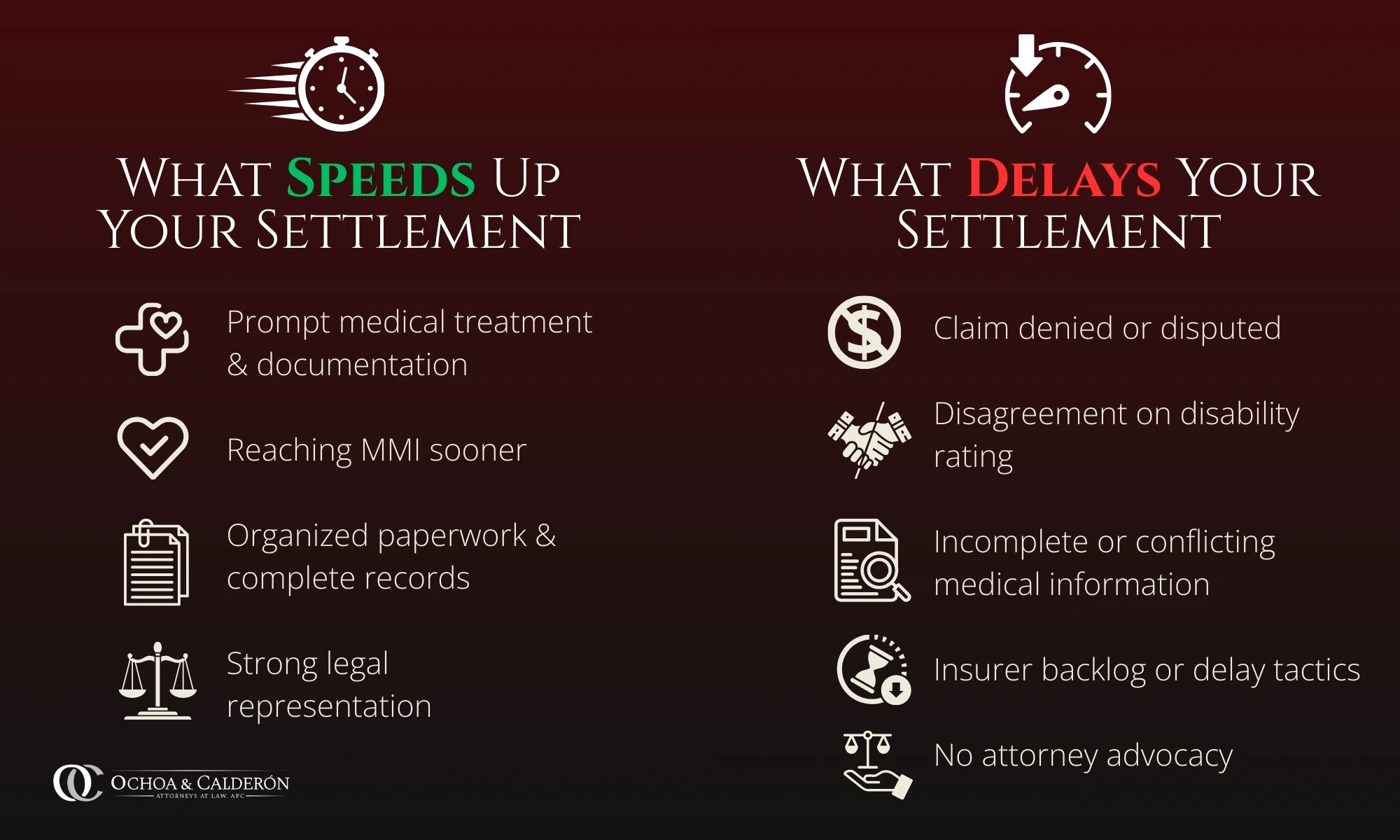
Most workers’ comp insurance companies are willing to settle a case before an injured employee reaches MMI. The timing depends on several factors that can speed up or slow down your settlement offer:
- Whether your employer's insurance accepts or denies your initial claim.
- How quickly you complete required medical evaluations and treatments.
- If disputes arise over your disability rating or need for future medical care.
- The insurance company's workload and its willingness to negotiate fairly.
- The worker’s personal financial situation.
- Whether the carrier is offering an adequate amount of money to settle.
- Whether you have legal representation pushing for a faster and fairer resolution.
Should You Accept the Workers' Comp Settlement Offer?
Deciding whether to accept a settlement offer requires careful evaluation of your current situation and future needs. Insurance companies often present their first offer as final, but injured workers have rights and options that many don't realize exist. Before signing anything, consider whether the offer truly compensates you for all aspects of your injury.
What Your Settlement Must Cover
Your settlement needs to address both immediate and long-term consequences of your workplace injury. California workers' comp settlements should include compensation for temporary disability payments you've already received, permanent disability based on your impairment rating, and provisions for future medical treatment.
Many injured workers make the mistake of focusing only on the lump sum amount without considering whether it adequately covers anticipated surgeries, ongoing therapy, prescription medications, or medical equipment they'll need years down the road. A fair settlement also accounts for job displacement benefits if you cannot return to your previous position.
Can You Reject a Settlement Offer in California?
Yes, you can reject a settlement offer if it does not meet your needs or adequately compensate you for your injuries. California law gives injured workers the right to refuse any settlement proposal, and insurance companies cannot retaliate by cutting off existing benefits. Rejecting an offer doesn't mean starting over — it means continuing negotiations for better terms. Many workers fear that turning down an offer means they'll get nothing, but the opposite often proves true. Insurance companies routinely test whether injured workers will accept quick, inadequate settlements. When you reject their lowball offer and demonstrate you're prepared to fight for fair compensation, they typically return with improved proposals.
How Workers' Comp Settlements Are Paid
California allows flexibility in how you receive your workers' compensation settlement money. The payment structure you choose can impact your financial planning and potentially affect your eligibility for other benefits. Selecting the right payment method can make a significant difference in your financial recovery.
Settlement payment options include several approaches, each with distinct advantages:
- Lump sum payments: Deliver your entire settlement at once, giving immediate access to funds for bills, debts, or investments.
- Structured settlements: Spread payments over months or years, providing steady income but limiting access to large amounts.
- Combination approaches: Mix upfront money with ongoing payments, balancing immediate needs with long-term security.
- Medicare Set-Asides: May be required for future medical expenses if you're Medicare-eligible, protecting the government's interests.
- Attorney fee deductions: Come out before you receive funds, typically 15% of your settlement amount in California.
Suing Your Employer Beyond Workers' Comp
While workers' compensation typically serves as the exclusive remedy for workplace injuries, certain situations allow injured workers to pursue additional legal action against their employers or third parties. Knowing these exceptions could significantly increase your total recovery.
When You Can Sue Your Employer Directly
California's workers' compensation system typically prevents lawsuits against employers — that's the trade-off for guaranteed benefits without requiring proof of fault. However, specific circumstances create exceptions where you can pursue additional legal action.
Intentional harm opens the door to lawsuits, such as when an employer deliberately injures you or knowingly sends you into dangerous situations likely to cause injury. Employers operating without required workers' comp insurance lose their protection from lawsuits entirely. Serious and willful misconduct, like removing safety guards from machinery or ignoring repeated safety violations, may allow additional penalties up to 50% of your workers' comp award.
Additional Damages Beyond Workers' Comp
When you can sue outside the workers' comp system, you gain access to damages that workers' comp doesn't cover, and these amounts often dwarf standard settlements. These cases let you recover pain and suffering, full lost wages, and other damages workers' comp doesn't cover.
Personal injury lawsuits allow recovery for physical pain, emotional distress, loss of life enjoyment, and punitive damages meant to punish egregious conduct. You can seek 100% of lost wages instead of the two-thirds that workers' comp provides. Future earning capacity, spousal loss of consortium, and full medical expenses without fee schedules all become available. These damages are in addition to your workers' compensation benefits, though the workers' comp insurance company may claim reimbursement rights against your personal injury recovery.
How a Lawyer Helps Maximize Your Workers' Comp Settlement

Effective negotiation requires thorough documentation of your medical treatment, disability rating, and work status. Experienced workers' compensation attorneys bring specific advantages that typically result in substantially higher settlements. They level the playing field against insurance companies that handle thousands of claims annually.
Key ways attorneys increase settlement values include strategic actions at every phase:
- Force faster claim processing by knowing which deadlines insurance companies must meet and holding them accountable.
- Identify all available benefits — many workers don't realize they qualify for vocational rehabilitation, mileage reimbursement, or penalty payments.
- Challenge inadequate disability ratings through independent medical evaluations and qualified medical evaluator testimony.
- Document future medical needs comprehensively, preventing insurance companies from minimizing long-term care costs.
- Negotiate from strength using verdicts and settlements from similar cases as leverage.
- Handle Appeals Board hearings when insurance companies refuse reasonable offers.
- Coordinate benefits between workers' comp, state disability, and personal injury claims for maximum recovery.
- Protect your interests during mandatory settlement conferences where judges push for quick resolutions.
Without representation, insurance adjusters control the narrative, the timeline, and ultimately, your settlement amount. They're trained negotiators handling hundreds of cases, so you deserve an equally skilled advocate fighting for your interests.
We Can Negotiate Better Settlement Terms
Don't accept whatever insurance proposes first. Skilled negotiation often doubles or triples initial offers significantly. Contact Ochoa & Calderon for experienced legal help!
We’ll Fight for What’s Rightfully Yours
Don't let them minimize your pain or your claim. We fight for maximum compensation. Get a free consultation today.
Your Workers' Comp Settlement Timeline Starts Now
Every day you wait to get proper legal help is another day insurance companies work to minimize your claim. While they build their case for paying you less, your bills pile up, and your rights to certain benefits may expire.
Ochoa & Calderon turn the tables on insurance companies, using decades of experience and proven strategies to secure settlements that actually reflect what injured workers need. If you have questions or need assistance with your workers' compensation claim, contact us for experienced legal advice and support. Call 951-901-4444 to start building your case today!

Co-Founder & Partner
Co-founder bringing elite education from Pacific Union College and Chapman Law to every case.
Heading
Don't let them minimize your pain or your claim. We fight for maximum compensation. Get a free consultation today.