Riverside Disability Discrimination and Reasonable Accommodation Lawyers
Protecting Workers from Disability Discrimination in Workplaces Across Southern California
Ochoa & Calderon


Protecting Workers from Disability Discrimination in Workplaces Across Southern California
Ochoa & Calderon
Disability discrimination continues to affect thousands of California workers every year. When you're denied reasonable accommodations, passed over for promotions, or terminated because of a physical or mental disability, it's not just unfair treatment — it's illegal. At Ochoa & Calderon, our Riverside disability discrimination attorneys bring decades of combined experience and insider knowledge from representing Fortune 500 companies to now fight for employees throughout the Inland Empire.
We understand that facing discrimination while managing a disability creates overwhelming challenges. You shouldn't have to choose between your health and your livelihood. Our employment law attorneys know California's Fair Employment and Housing Act inside and out, and we use that knowledge to hold employers accountable when they violate your rights. Whether you've been denied accommodations, subjected to harassment, or wrongfully terminated, we're ready to fight for the compensation and workplace changes you deserve.

20 years+
of experience
$200+ million
recovered for clients
According to the U.S. Equal Employment Opportunity Commission, disability discrimination charges account for a substantial share of all workplace discrimination complaints filed each year. In recent years, the EEOC has received tens of thousands of disability-based charges nationwide, with California consistently ranking among the states with the highest number of cases. These statistics reflect only reported incidents, as countless more workers endure discrimination without ever filing formal complaints.
The Bureau of Labor Statistics reports that employment rates for persons with disabilities remain significantly lower than for those without disabilities, highlighting ongoing barriers to workplace equality. Many qualified individuals with disabilities never receive fair consideration for positions they could perform with reasonable accommodations.
Disability discrimination takes many forms, from subtle bias to overt violations. Recognizing these patterns helps protect your legal rights:
Firing an employee due to a physical or mental disability, a request for reasonable accommodations, or after medical leave may violate state and federal law. Many employers disguise this as a performance issue. If your termination followed such actions, you may have a valid disability discrimination claim.
Qualified individuals with disabilities cannot be denied jobs due to bias or assumptions. Rejecting applicants over a real or perceived disability, asking prohibited questions, or requiring medical exams before an offer may violate employment law. Our Riverside disability discrimination attorneys can evaluate your case.
Denying raises or promotions due to a disability is a form of unlawful discrimination. Employers must not use medical conditions as a reason to block advancement. You may be entitled to lost wages and benefits under California's fair employment protections.
Jokes, slurs, or mistreatment related to a mental impairment or other protected characteristics can create a hostile workplace. If your employer fails to act, this may violate state or federal law. Such harassment is illegal when it's severe or ongoing. Our firm also handles sexual harassment cases, giving us a comprehensive understanding of hostile work environment claims.
You're protected when you report disability discrimination, request accommodations, or support another employee. Retaliation in the form of demotion, reduced hours, or termination can support a separate legal claim under California law. These employee rights violations demand aggressive advocacy.
California and federal laws require employers to make reasonable accommodations for employees with disabilities. Your employer does not need to spend millions to redesign the entire building or pay you for a job you are simply unable to perform, but if you are able to work with reasonable accommodations to allow for your condition, your employer is required to make the effort.
Common accommodations include:
The key principle is that accommodations must enable you to perform essential job functions. Employers cannot deny accommodations based on minor inconveniences or unfounded concerns about cost.
If your employer refuses reasonable accommodations, document everything:
Then contact our Riverside disability discrimination lawyers. Our aggressive employment law team, which also handles workplace discrimination cases, analyzes whether your employer's denial of accommodations was legally justified or discriminatory.
Don't let employers ignore your accommodation needs. Contact Ochoa & Calderón today!
When employers violate disability discrimination laws, California provides substantial remedies for disabled workers who have been treated differently:

When employers act with malice, oppression, or conscious disregard for employee rights, punitive damages punish egregious conduct and deter future violations. California places no caps on punitive damages in disability discrimination cases, allowing juries to send powerful messages to employers who deliberately violate the law.
Courts can order employers to implement policy changes, provide training, reinstate you to your position, or take other corrective measures. You're also entitled to recover reasonable attorney fees and costs, which is why we can represent clients on a contingency fee basis. You don't pay unless we win.
Despite robust legal rights protections, many disabled workers face unlawful discrimination from employers who fail to understand or deliberately ignore their obligations under state and federal law.
The Americans with Disabilities Act (ADA), enacted in 1990, provides comprehensive federal protections against disability discrimination. The ADA applies to employers with 15 or more employees, including private employers, state and local governments, employment agencies, and labor unions. Under the ADA:
The ADA defines disability as a physical or mental impairment that substantially limits one or more major life activities, a record of such impairment, or being regarded as having such an impairment. This broad definition protects workers with visible disabilities, invisible chronic conditions, and even those with a perceived disability.

California's Fair Employment and Housing Act (FEHA) offers broader protections than federal law by covering employers with just five or more employees and defining disability to include conditions that merely "limit" major life activities. It extends the three-year window for filing complaints, imposes no caps on damages in discrimination cases, and protects medical conditions such as cancer and genetic traits.
According to the California Civil Rights Department, FEHA applies to significantly more employers than federal ADA requirements. Alongside FEHA, the Unruh Civil Rights Act, and California's Disabled Persons Act, these laws further enhance rights related to public access and services, creating comprehensive safeguards for disabled individuals across Riverside County and Southern California. Together, these state and federal laws create robust protections.
Both FEHA and the ADA protect a wide range of physical or mental impairments. Protected characteristics include, but are not limited to:
Know whether your condition qualifies as a protected disability under California law or federal law to ensure your rights are upheld in the workplace. A skilled disability discrimination attorney can help you take action against unlawful discrimination and secure the compensation you deserve.

Co-Founder & Partner
Co-founder bringing elite education from Pacific Union College and Chapman Law to every case.
Co-Founder & Partner
USC Law graduate with 20+ years of experience making insurance companies pay what they owe.
More About William CalderónFighting disability discrimination requires attorneys who understand both the law and employer tactics:

We bring decades of experience to the table, securing millions in compensation for disabled employees across Southern California.

From filing complaints with the California Civil Rights Department through trial, if necessary, we handle everything. No missed deadlines, no paperwork stress, no wondering about next steps. You focus on your health while we focus on your case.

You face no financial risk when working with us. We operate on a contingency fee basis, meaning you pay no attorney fees unless we recover compensation for you.
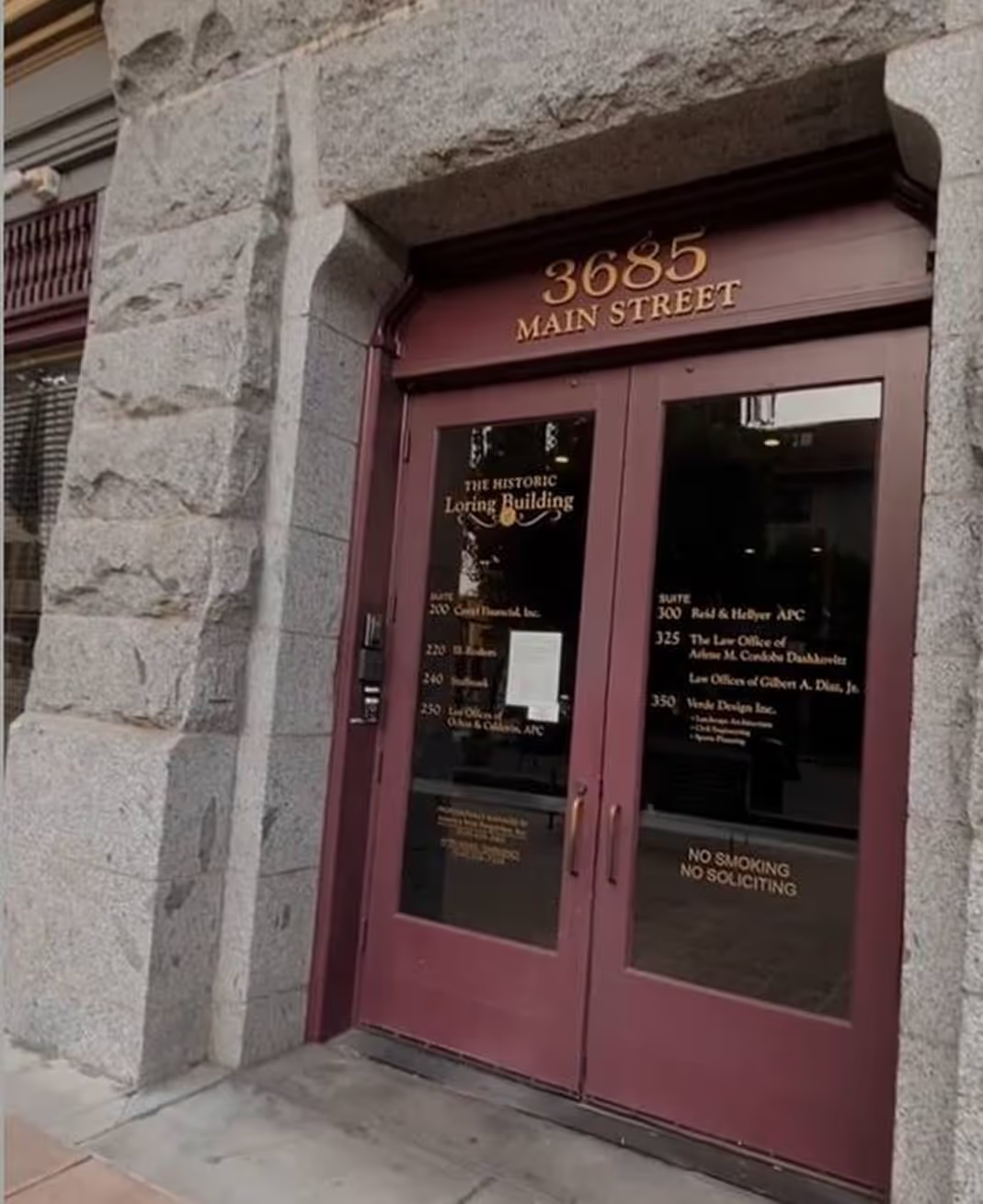
With our main office in Riverside, we proudly serve disabled workers facing discrimination across the Inland Empire and beyond:
.avif)

If you're an employee seeking accommodations for your job, Ochoa & Calderón is here to help. Contact us for guidance and support in all matters of California employment law.